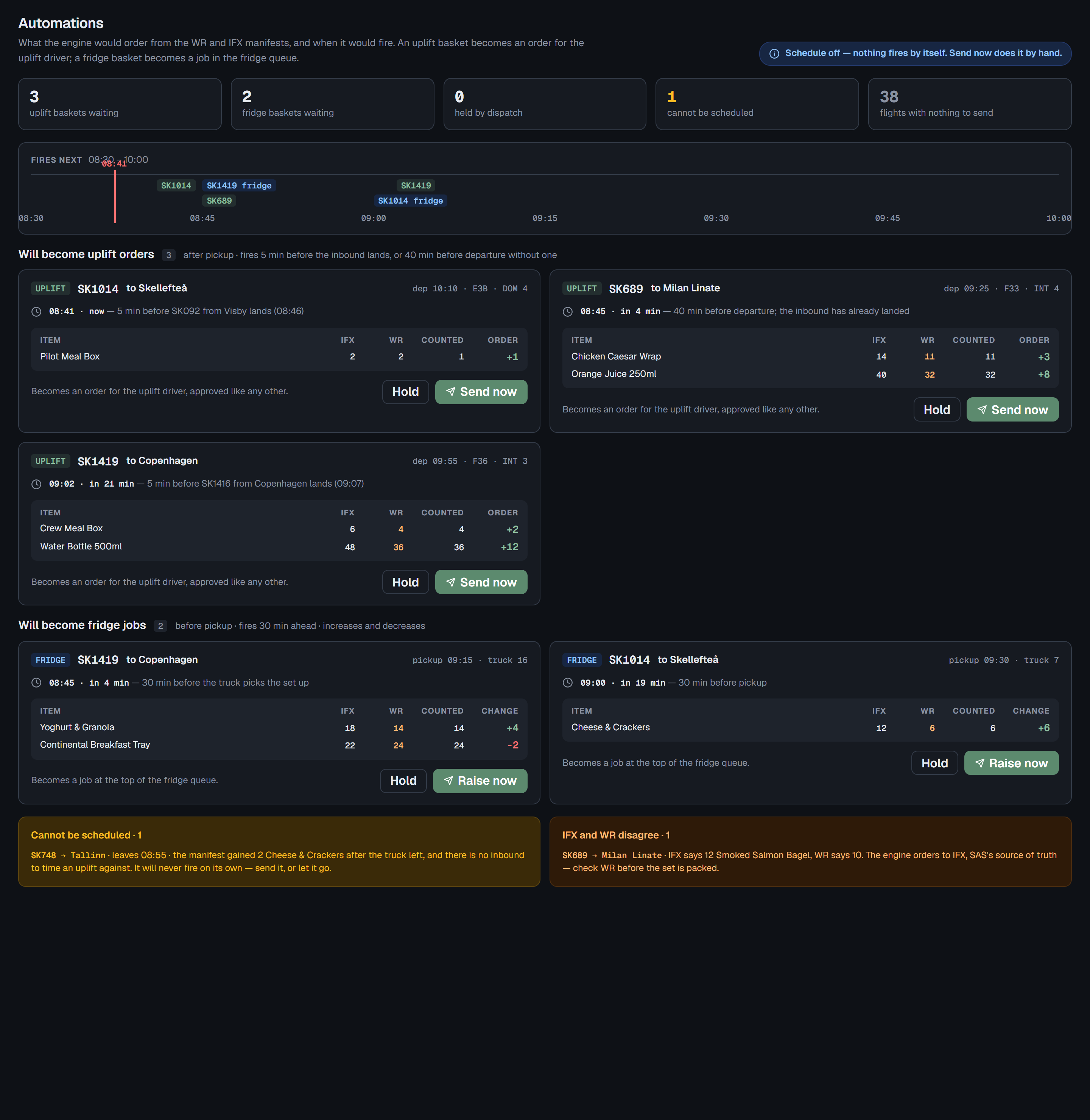
Built · test data until WR/IFX is connected

It finds the changes, so dispatch doesn't have to.

On the floor I spent 4–6 hours a shift digging through WR for alerts.

Automations does the digging. Dispatch makes the call.

How it works

One question decides where a change goes.

Not yet → the fridgeA job in the fridge queue: add 3 wraps to SK1419. One tap when it's done.
Picked up
Already gone → upliftAn uplift order for the difference. Dispatch approves it. The uplift driver brings it.

A change before pickup is a walk to the cold room. After pickup it's a car trip to the stand.

Today, and with Gælley

Finding the change vs. being told about it.

Today

  1. A change lands in IFX or WR. Nobody is told.
  2. Dispatch opens each flight's audit trail to find it.
  3. By then the set is often gone, so it's an uplift run.
  4. Or the crew find it at the door.

With Gælley

  1. Every change is caught when it happens.
  2. Before pickup it's a fridge job. After, an uplift order.
  3. Fridge jobs go out 30 min before pickup. Uplift orders 5 min before the inbound lands.
  4. Dispatch approves orders instead of writing them.
Aircraft swaps and no-cat

An aircraft swap no longer means checking for food by hand.

Today every RAD means checking “food on this flight or not?” by hand. Miss one and it's a GB delay.

The no-cat check reads WR and IFX, so it starts when that connection is live.
The details

Small things that matter on a busy day.

Automations: what goes out, when, and why
AUTOMATIONS · WHAT GOES OUT, WHEN, AND WHY · ON REAL ARLANDA FLIGHTS
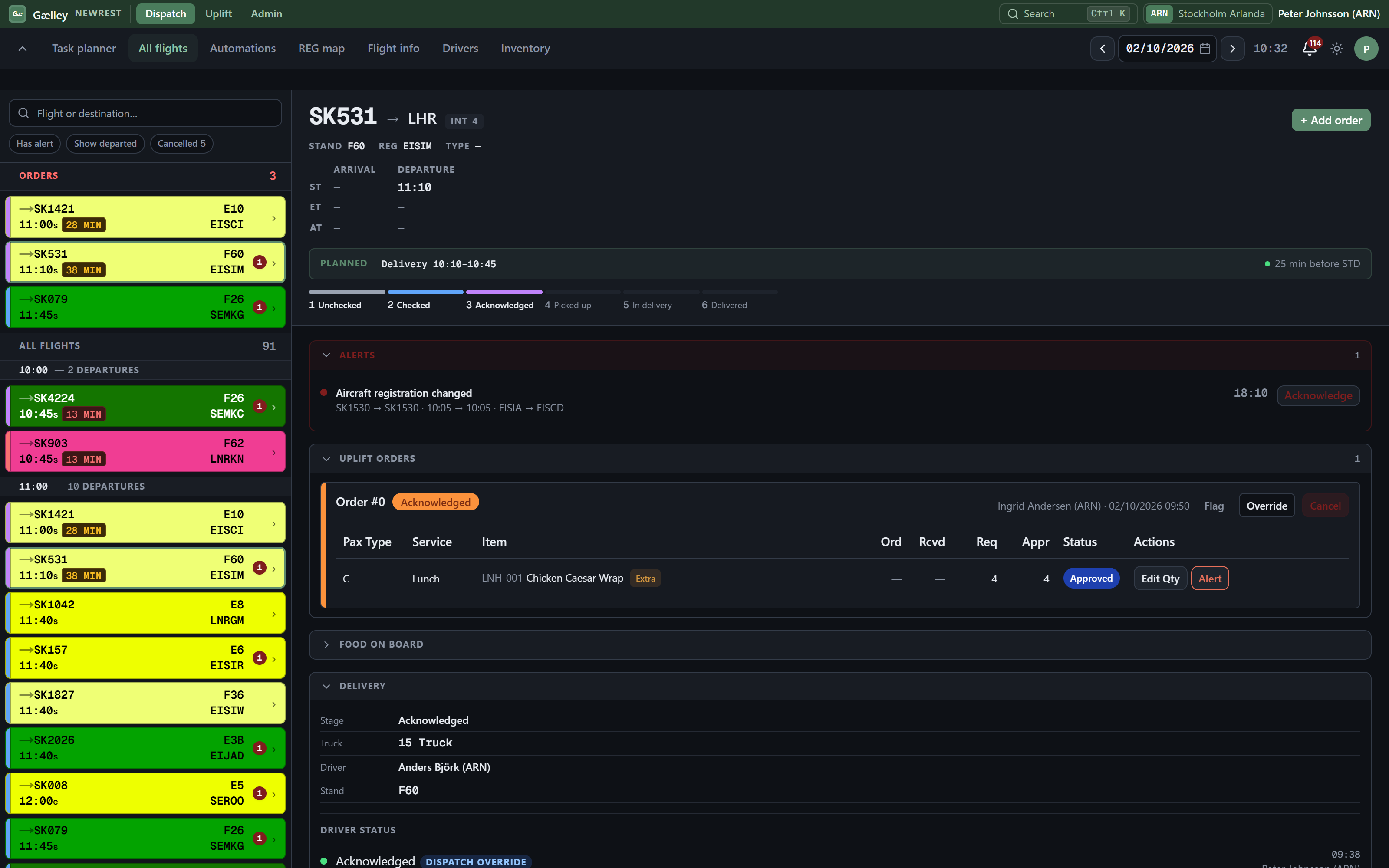
A flight page with an aircraft alert and an uplift order
A FLIGHT · THE ALERT, THE ORDER, THE DELIVERY
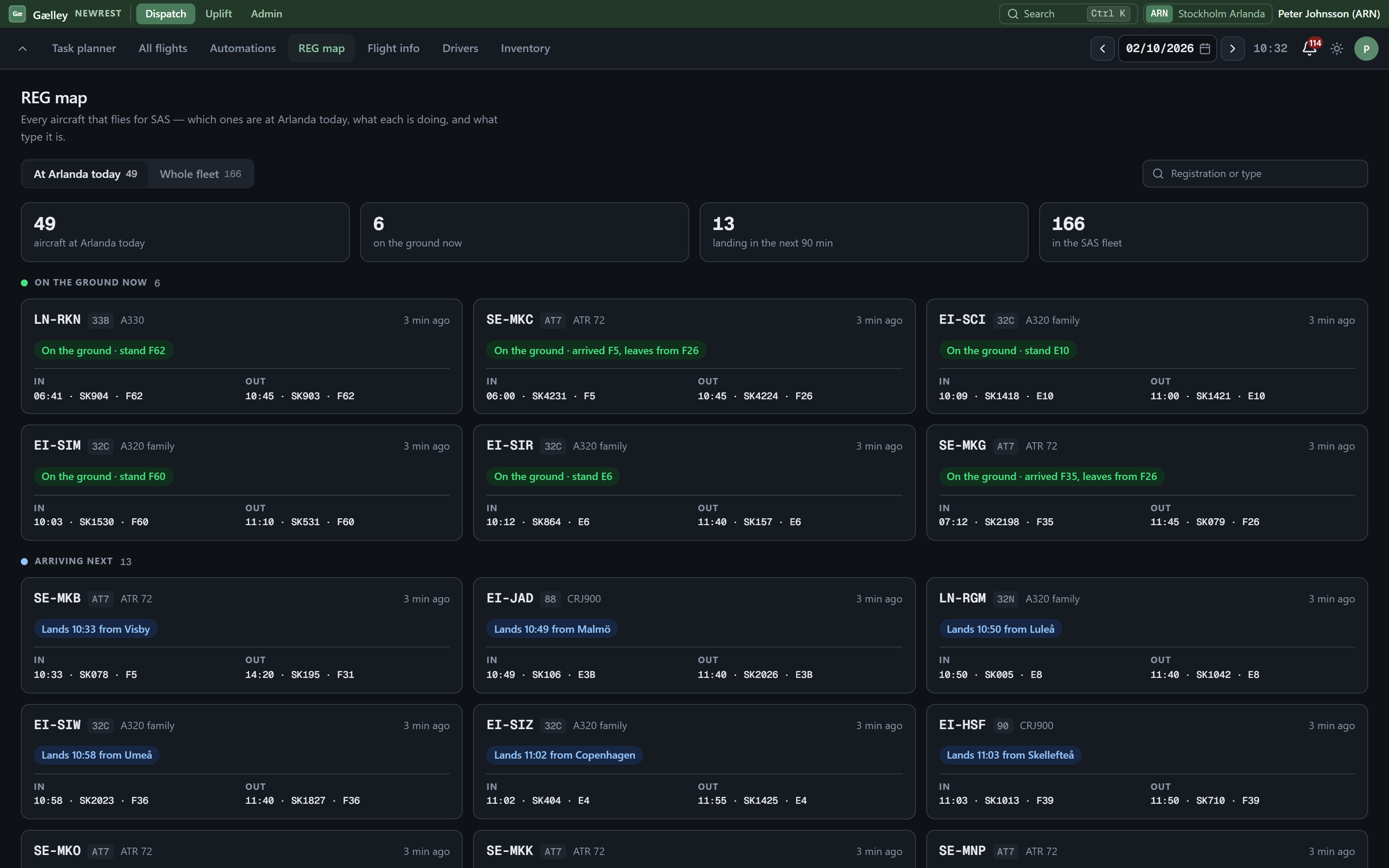
REG map: every SAS aircraft at Arlanda today
REG MAP · WHICH AIRCRAFT IS WHERE, FROM THE FEED
What it gives back
8–12 hof dispatch time a day, per unit, spent checking alerts by hand.